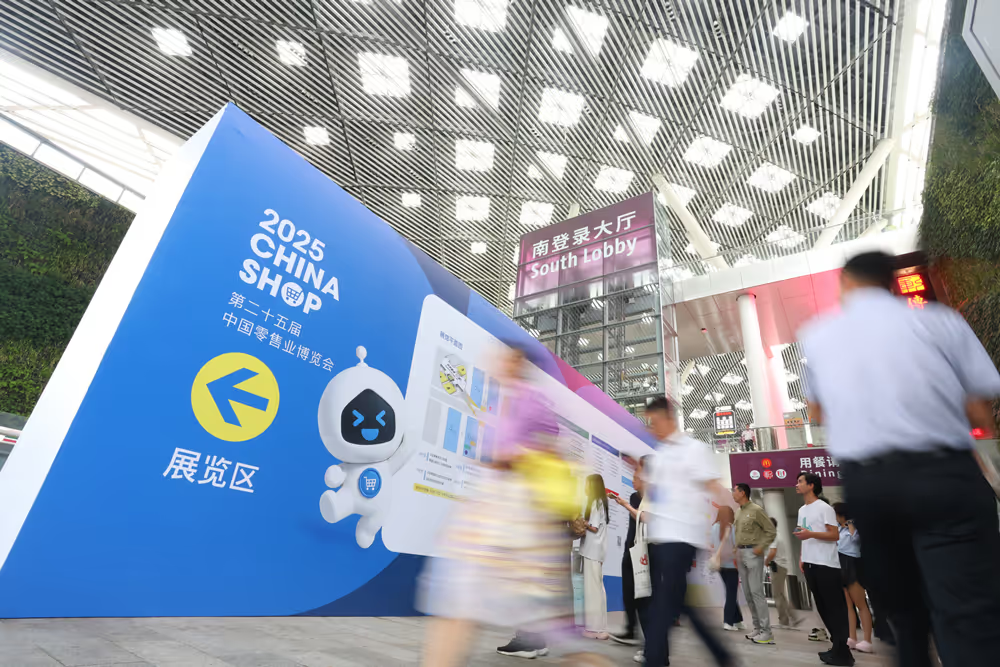
CHINASHOP History
For over two decades, CHINASHOP has evolved alongside China's retail industry.
As retail formats, technologies, and consumer behavior have transformed, so has the role of this exhibition — from a professional trade show into a comprehensive platform connecting retail decision-makers, brands, and solution providers.
More than a record of past editions, the history of CHINASHOP reflects the broader journey of China's modern retail development. Each stage of its growth mirrors a defining chapter in the industry itself.
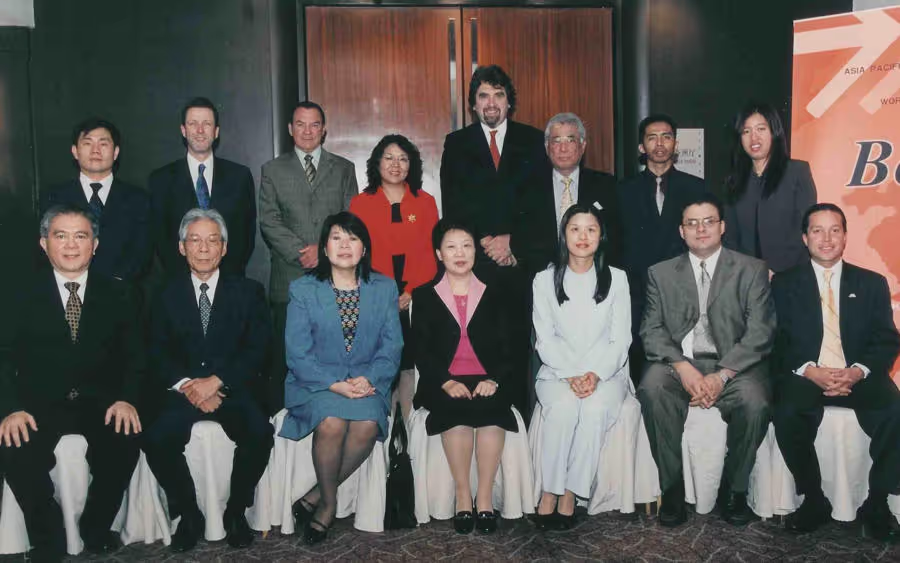
CHINASHOP at this time was centered on one urgent mission: enabling faster store openings and securing sufficient merchandise. It marked the starting point for a generation of Chinese retail entrepreneurs searching for opportunity in a rapidly expanding market.
Exhibition Characteristic
Buyers hosted booths, while suppliers approached them on-site with solutions.
Industry Context
This was the frontier era of China’s modern retail industry. Standardized retail infrastructure—such as checkout counters, shelving systems, and refrigeration equipment—barely existed. Retailers aiming to open a supermarket often had to rely on local carpenters or metal workshops to produce basic fixtures, with little standardization, scalability, or aesthetic consideration.
Core Dynamic
At this stage, the exhibition logic was almost the reverse of today. Retailers and buyers were the primary exhibitors, presenting themselves as potential partners. Suppliers, carrying samples and capabilities, actively visited these booths to demonstrate what they could provide.
Exhibition Characteristic
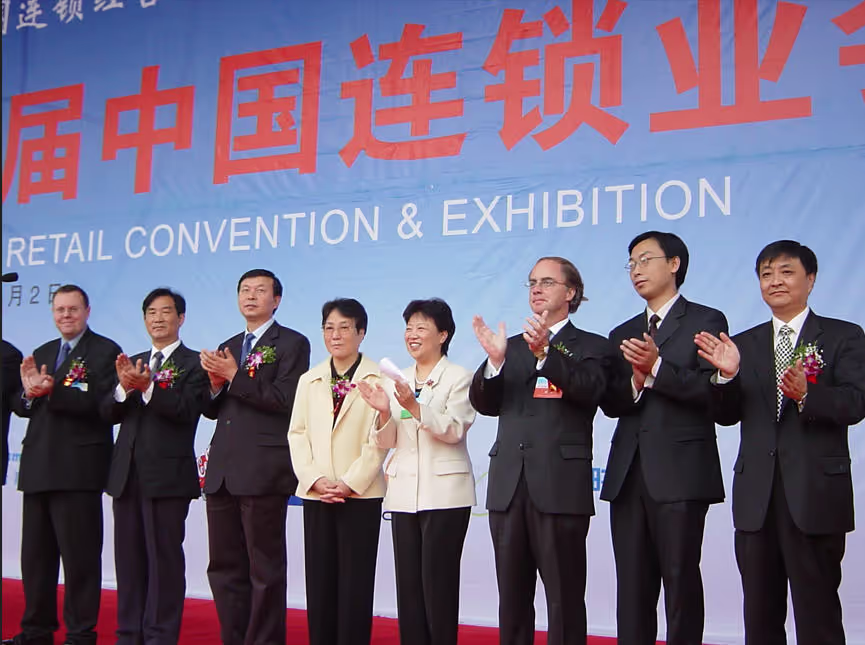
Factories took center stage, and store equipment became the core exhibits.
Industry Context
As international retail giants such as Carrefour, Walmart, and Metro expanded rapidly in China, the industry entered a phase of learning and replication. Comprehensive retail standards—store layout, customer flow, merchandising logic, cold-chain requirements, and equipment specifications—were systematically introduced.
At the same time, international retail equipment manufacturers and supply chain companies established operations and factories in China, while domestic suppliers began to grow at scale.
Industry Shift
During this period, CHINASHOP underwent a fundamental transformation. Store equipment—including shelving, refrigeration, lighting, and checkout systems—became the centerpiece of the exhibition. The show evolved into a professional platform for retail infrastructure, effectively becoming a “factory showcase” for the industry.
Retailers no longer needed to search for individual workshops. Instead, CHINASHOP enabled one-stop sourcing solutions that made standardized, turnkey store development possible.
Exhibition Characteristic
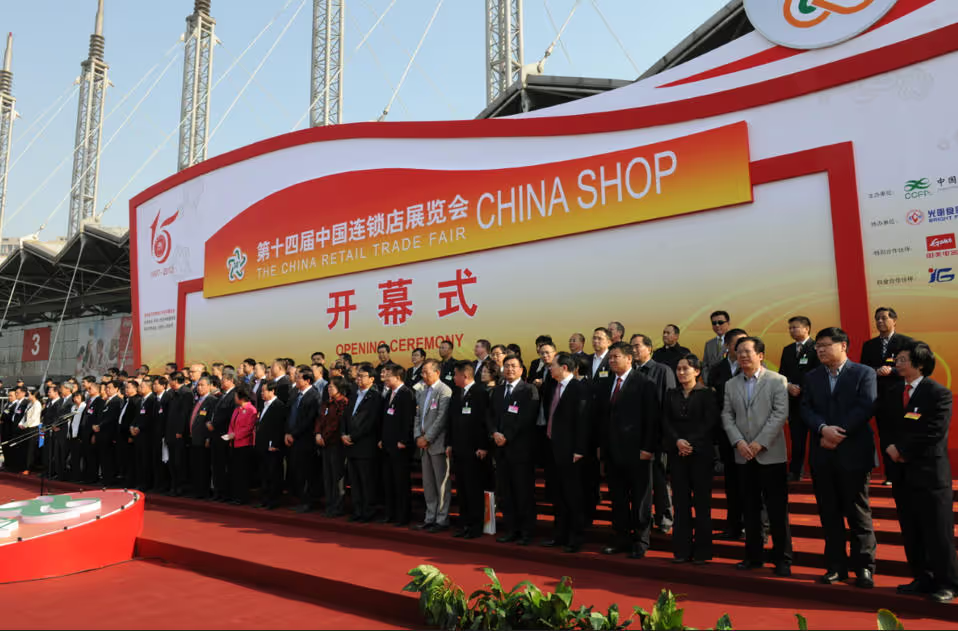
Integration of hardware and software, with early digital solutions emerging.
Industry Context
Entering the 2010s, China's retail industry began to experience deeper structural change. Consumption upgrades, accelerated urbanization, and expanding store networks made it clear that hardware alone could no longer support complex operations.
The relationship between people, products, and retail spaces started to be redefined.
Category Expansion
CHINASHOP's content expanded accordingly, incorporating ERP systems, retail management software, system integration solutions, network gateways, early data analytics tools, cold-chain logistics, warehousing and distribution systems, and fresh food processing and packaging solutions.
Retail was no longer just about opening a good store—it became about managing hundreds or thousands of stores through systems and data.
Exhibition Characteristic
Integration of hardware and software, with early digital solutions emerging.
Industry Context
With global attention drawn by Amazon Go and the rapid rise of Alibaba's Hema stores in China, "New Retail" became a defining concept of the era. Online-offline integration, real-time fulfillment, data-driven merchandising, and automated retail models entered large-scale experimentation.
Exhibition Transformation
This period injected new vitality into CHINASHOP. E-commerce platforms, technology companies, and data service providers moved from the periphery to the center of the exhibition.
The show evolved from a venue for displaying equipment into a comprehensive platform for discussing retail models, operational efficiency, and customer experience. CHINASHOP increasingly served as a bridge between retail innovation and real-world implementation.
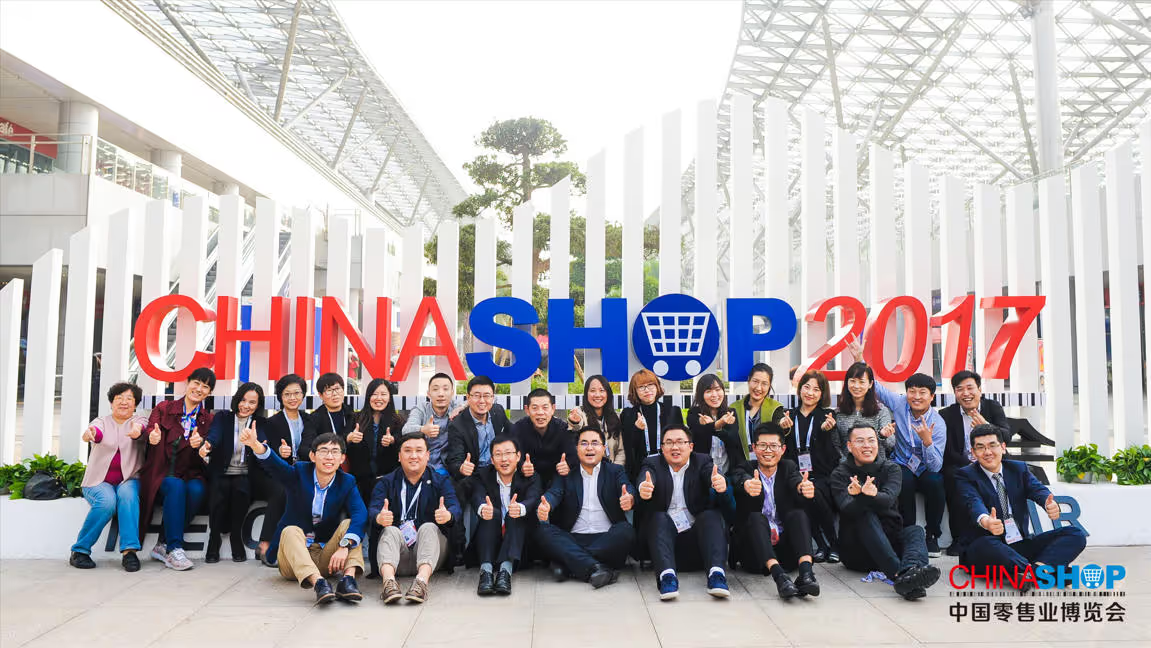
Modern Retail
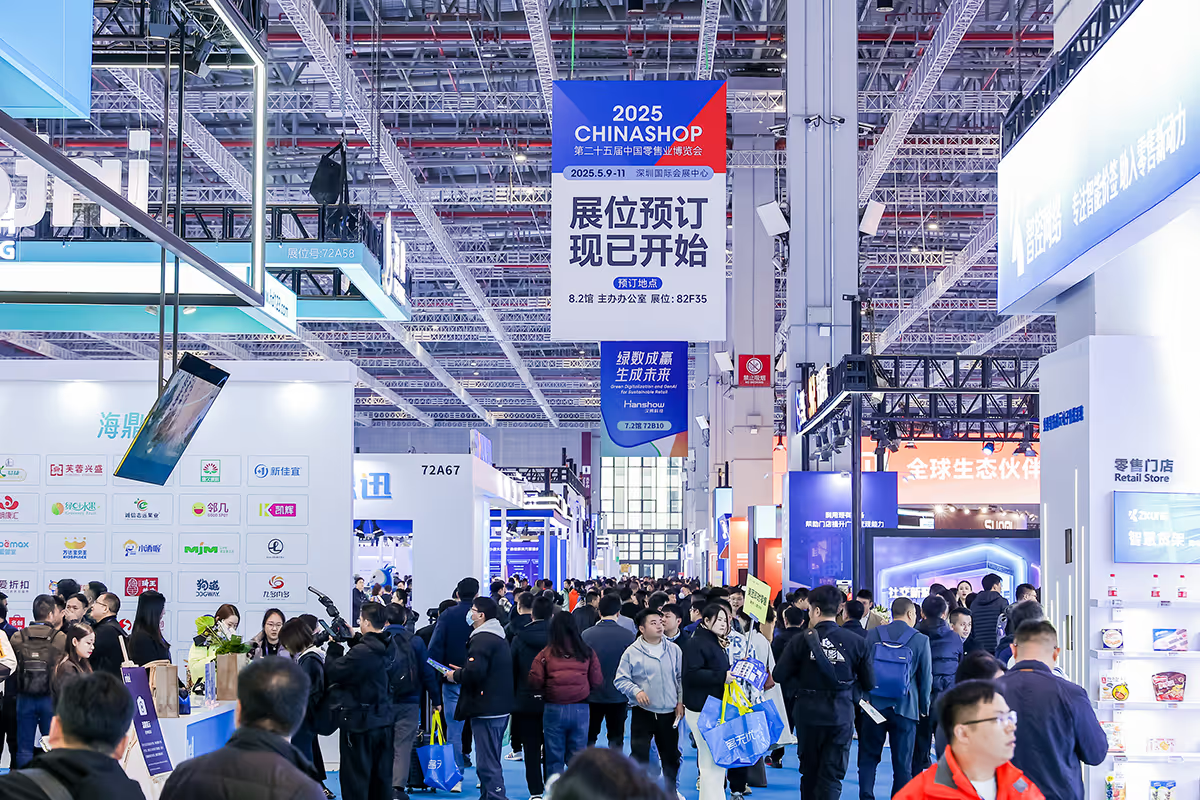
Today, the retail industry stands at the threshold of another structural transformation. Reinforcement learning, generative AI, computer vision, and intelligent forecasting systems are deeply reshaping merchandising, pricing, inventory, workforce scheduling, marketing, and supply chain decision-making.
In this phase, CHINASHOP's focus has shifted once again—from whether technology works, to how AI fundamentally improves retail efficiency and organizational capability.
CHINASHOP is no longer merely a witness to change. It has become an important testing ground for the deployment and scaling of next-generation retail technologies.
A history of Chinashop
From addressing basic supply shortages to enabling intelligent retail systems, CHINASHOP's evolution mirrors the transformation of China's retail industry itself—and continues to point toward what comes next.
.avif)