All posts
From E-Commerce to Omnichannel Powerhouse: How JD.com’s 7FRESH is Redefining Grocery with 445% Own-Brand Surge
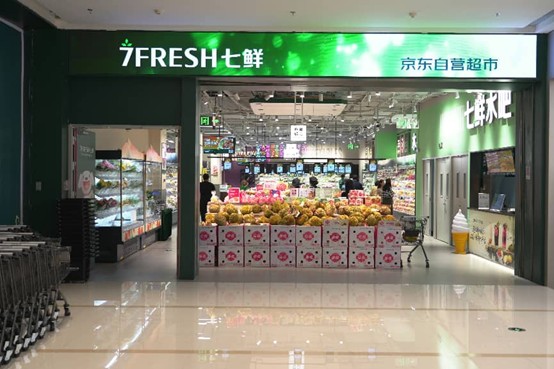
Inside JD.com’s 7FRESH: A Data-Driven Supermarket Where Own-Brand Sales Soar 445%
Introduction: The Digital Giant's Physical Playbook
For grocery executives in Berlin, Ohio, or Birmingham, the future of supermarket competition may already be unfolding—not locally, but 5,000 miles away in Beijing.
While you're optimizing shelf layouts and loyalty programs, JD.com, China's e-commerce titan often compared to Amazon, is reengineering the very DNA of the physical grocery store. Its 7FRESH chain isn't just growing; it's exploding, with a 445% surge in own-brand sales—a metric that should command the attention of every retailer worldwide. This is more than a China story; it's a live blueprint for omnichannel dominance. And with JD.com actively expanding its logistics footprint in Europe and beyond, its domestic innovations offer crucial clues to its next moves on the global chessboard.
Beyond China: Why 7FRESH Matters Globally
Why should Western retailers care about a Chinese supermarket? Because JD.com is taking its 7FRESH playbook global. Its domestic success directly informs its international strategy.
JD is already a logistics powerhouse in Europe, operating automated fulfillment centers that serve partners like ASOS. The trends perfected at 7FRESH—seamless omnichannel integration, instant delivery, and data-driven private labels—are the new global standard.
For international executives, JD presents a dual reality: it's a crucial gateway to the Chinese market and a future competitor in omnichannel retail. Understanding 7FRESH is essential intelligence for any strategic playbook.
Upon entering the Wangjing store, the most striking impression is the omnipresence of 7FRESH's own-brand products. From fresh produce, prepared foods, and bakery items to daily necessities like rice, eggs, milk, and even condiments, baijiu (Chinese liquor), bottled water, and snacks, each category offers consumers at least 1-3 own-brand product options.
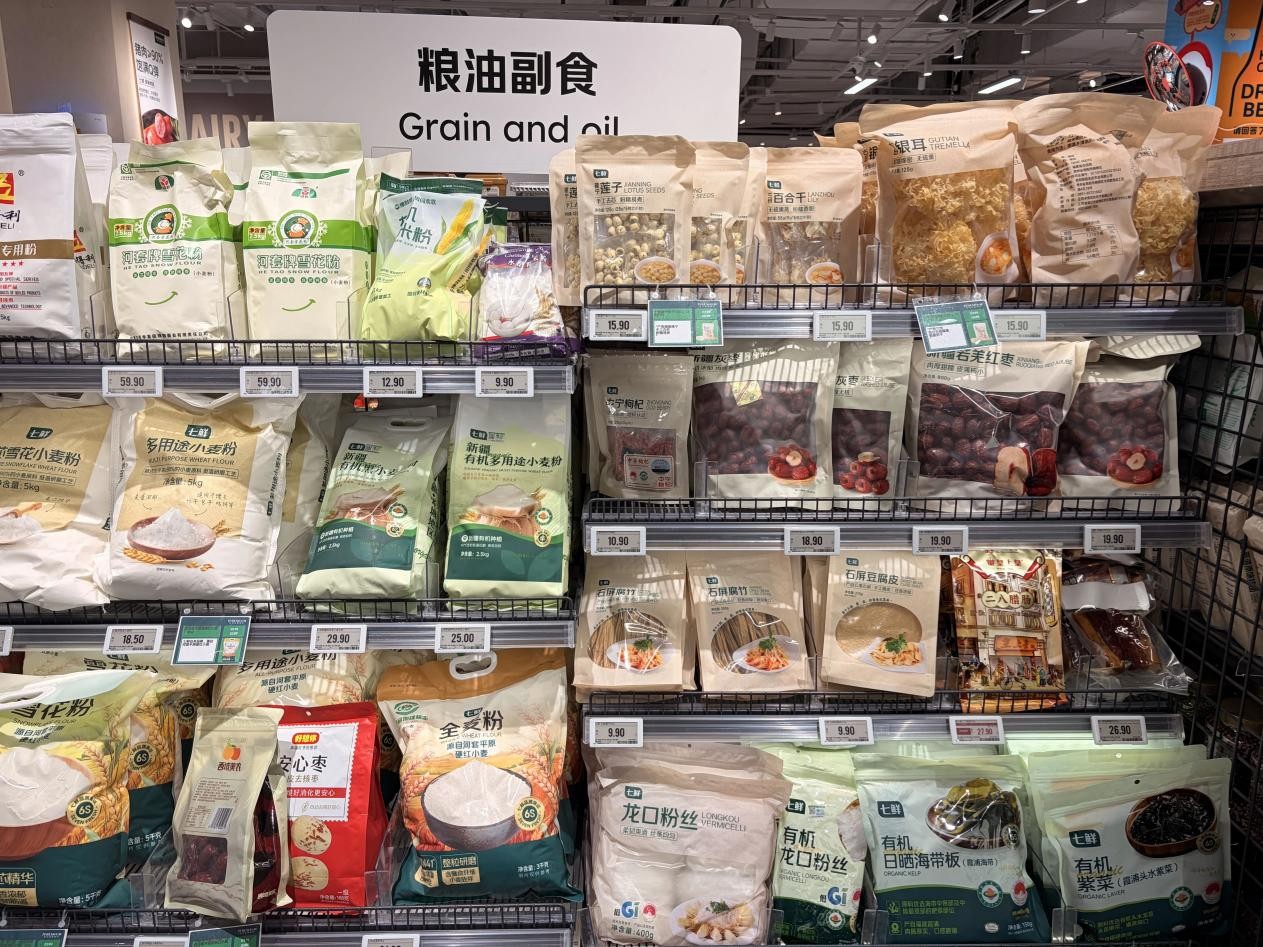
Deep consumer insight, precisely targeting personalized needs, and skillfully employing a cross-innovation model of "time-honored brands + new consumption" have become the methodology for creating 7FRESH hit products. Within the 7FRESH team, even post-2000s generation buyers are involved in research and development decisions to ensure products genuinely appeal to young consumers.
Taking fresh produce as an example, 7FRESH's own-brand organic vegetables saw Gross Merchandise Value (GMV) skyrocket 123% year-on-year in the past quarter, with items like organic carrots, organic bean sprouts, and organic tomatoes ranking among the top sellers.
Simultaneously, various co-branded products have also become a significant reason for consumer choice and repurchase. This summer, 7FRESH collaborated with the time-honored brand "Longhu" to develop a Wind Oil Essence Bursting Jelly Candy. With its unique cooling taste and fun concept, it quickly became a trendy "internet-famous snack" pursued by young consumers, with sales increasing over 100% month-on-month in the month following its launch and consistently topping 7FRESH's candy category rankings for several months.
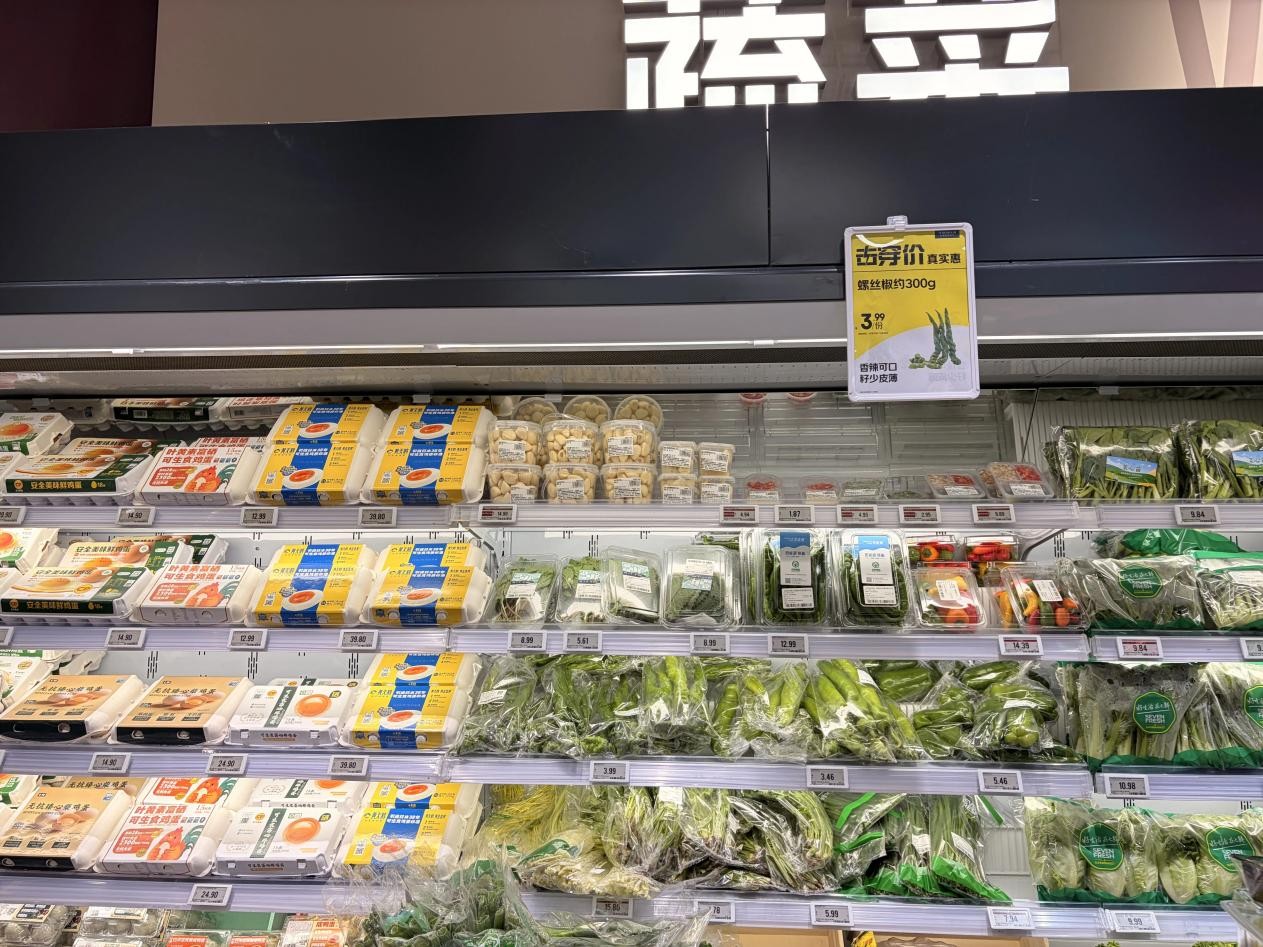
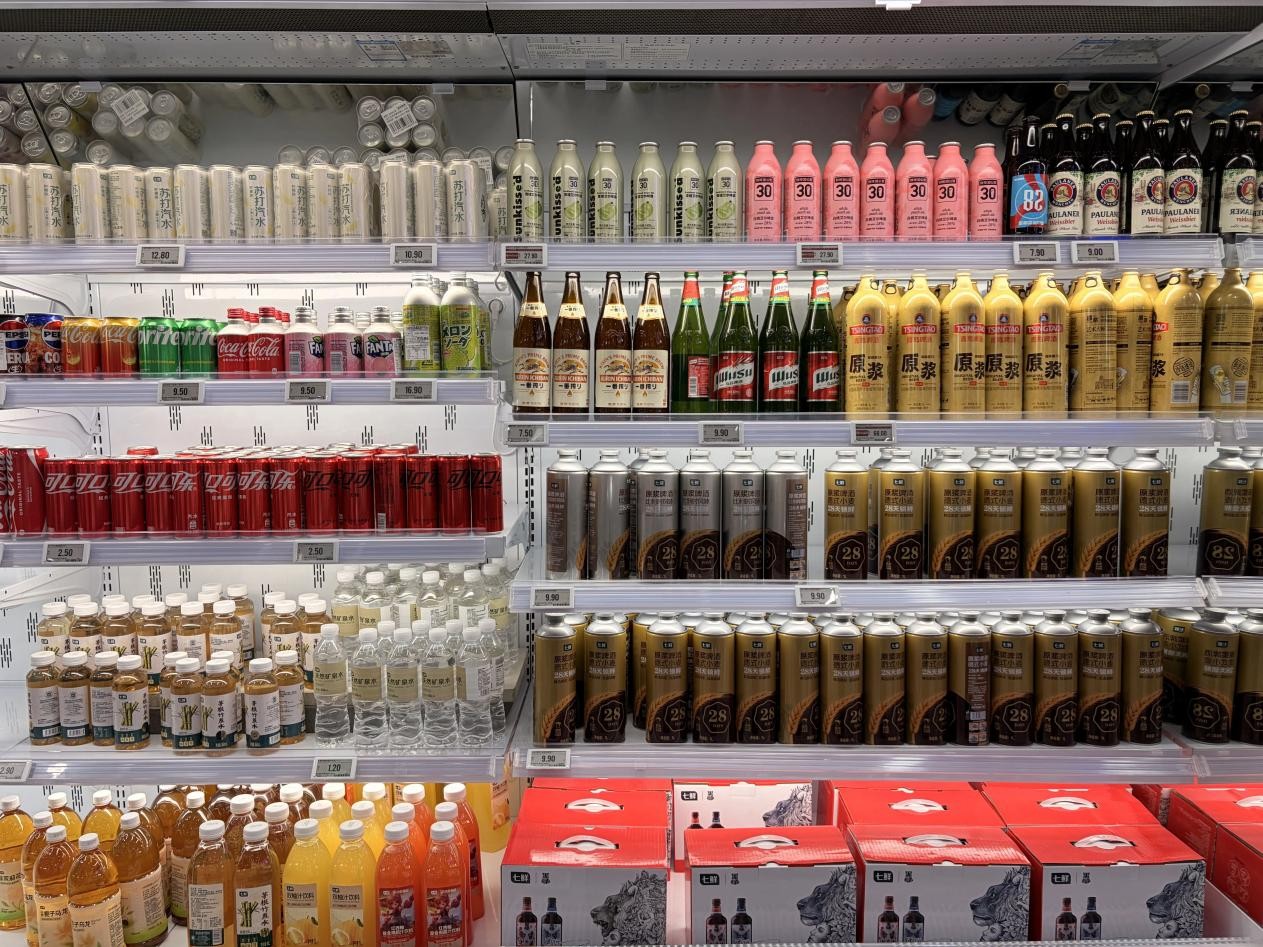
According to media reports, the number of 7FRESH own-brand items has exceeded 600, covering all categories and becoming the core engine of its business growth. Since the beginning of this year, the GMV of 7FRESH own-brand products has grown 445% year-on-year. In September, on average, one out of every two 7FRESH orders contained an own-brand product.
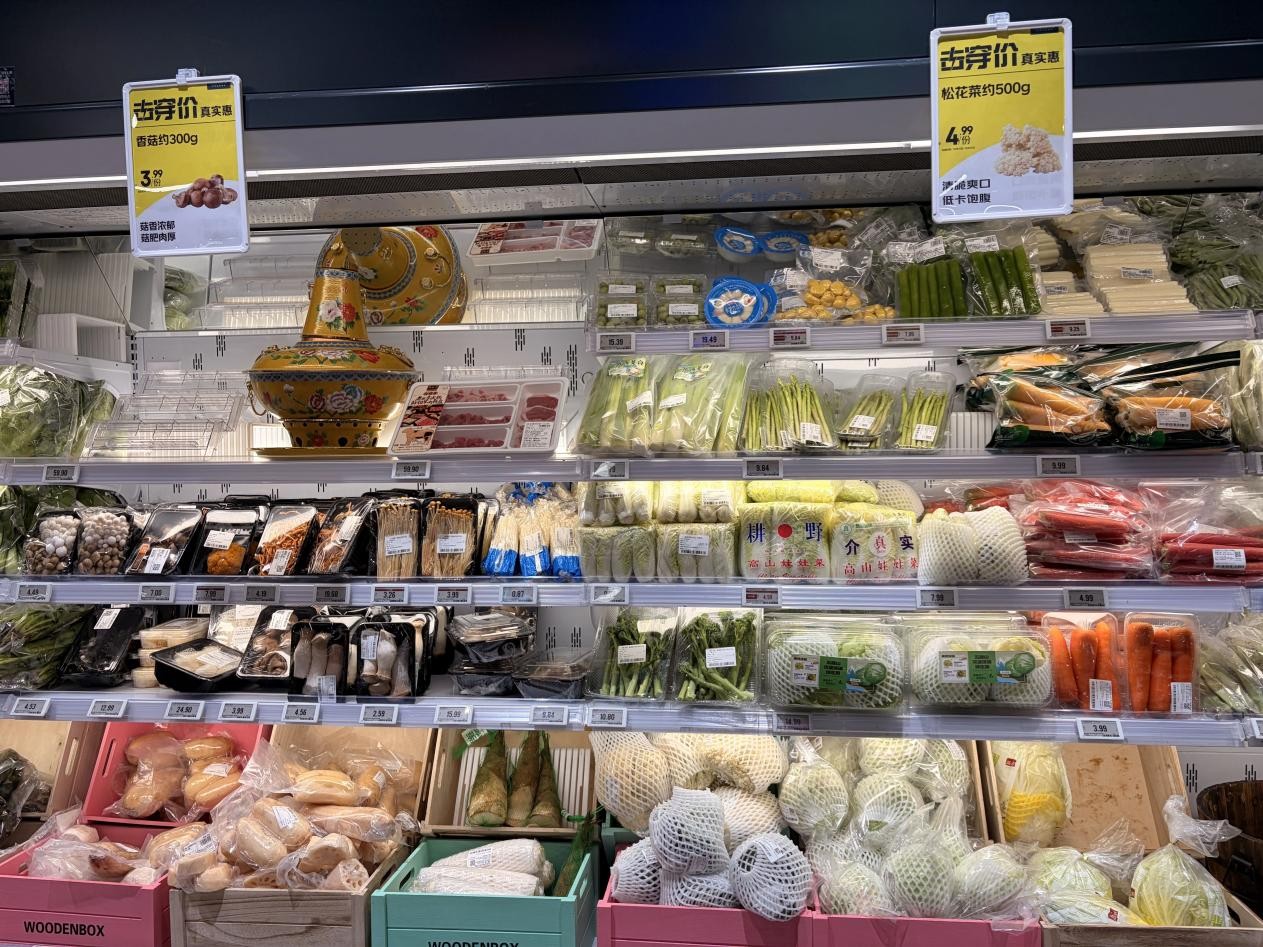
The fresh produce section best reflects 7FRESH's pricing strategy. In front of almost every category display, eye-catching yellow "Rock-Bottom Price" tags are visible: approximately 950g of Shandong Qixia Red Fuji apples (4 pieces) for 13.8 yuan; 200g boxes of chilled pork belly slices for 6.99 yuan each.
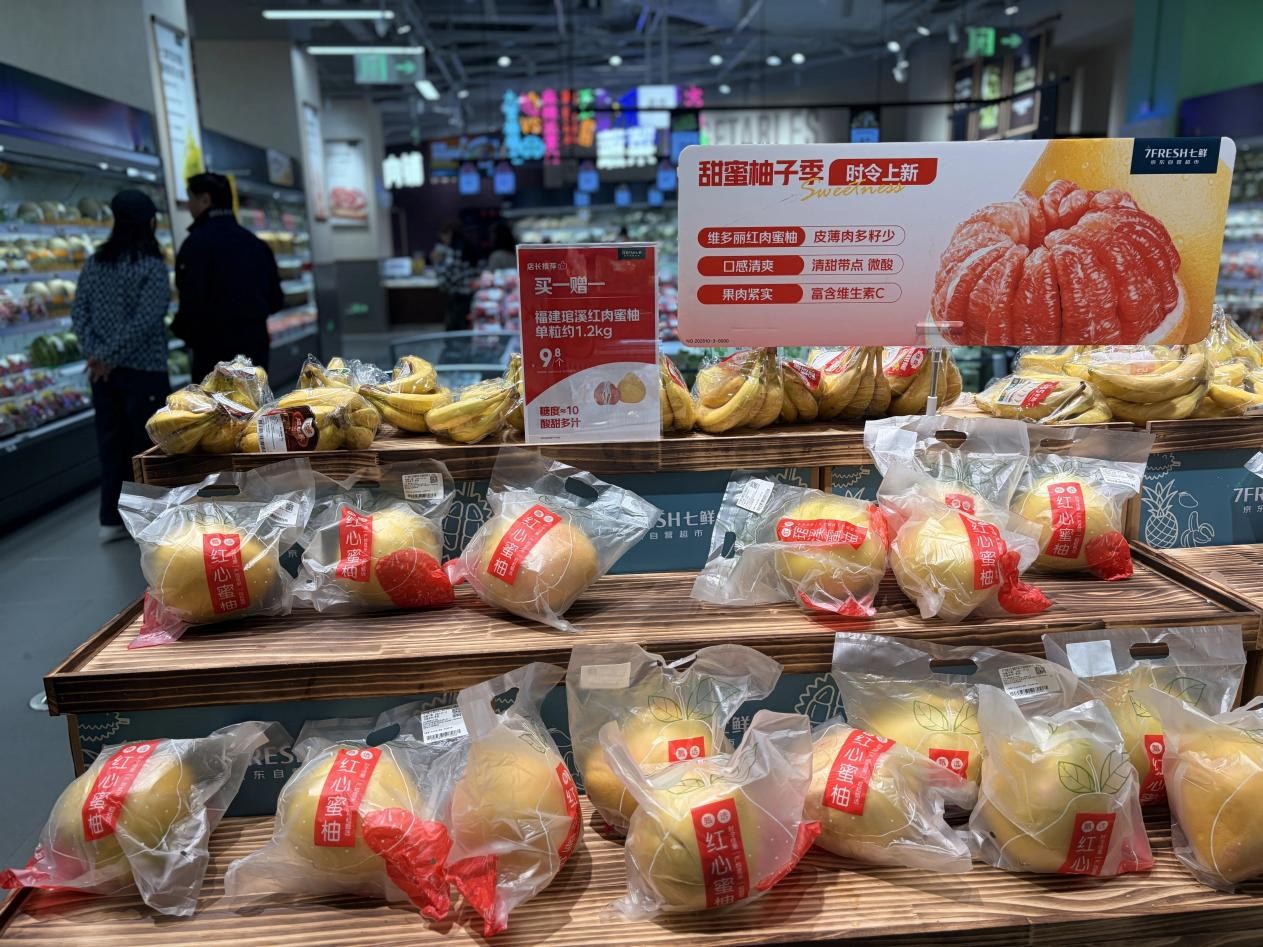
Offline prices are sometimes even more advantageous than online. On the day of the visit, the store had several products on a "Buy One Get One Free" promotion. Unlike traditional supermarkets discounting clearance or near-expiry items, these promotions primarily serve to attract customers to the physical store. For instance, Fujian Guanxi Honey Pomelos, each about 1.2Kg, were 9.8 yuan for two (Buy One Get One Free), making each pomelo only 4.9 yuan—half the price of the online offering.
The scenario-based display in the pre-cut vegetable section is particularly noteworthy. Three chilled cabinets form a small island, displaying various prepared ingredient packs with cooking instructions.
For example, the "Four Aquatic Treasures" combo includes eight ingredients in one pack: main ingredients lotus root, water bamboo, water caltrop, lotus seeds, and supporting ingredients carrot, snow peas, and fresh lily—the exact amount for one dish. Consumers can simply blanch and stir-fry them at home to recreate a nutritious and delicious home-cooked stir-fry.
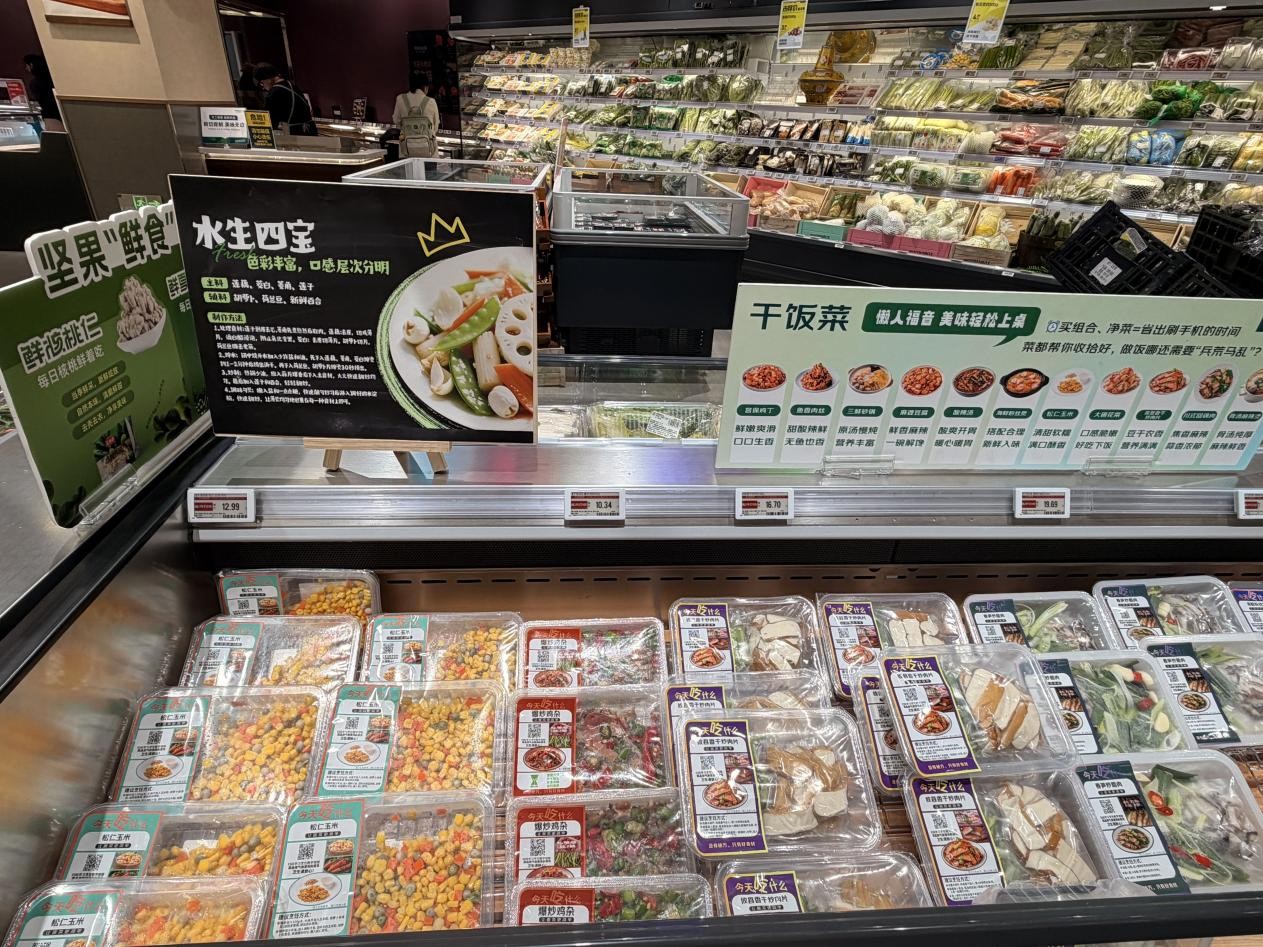
This simple, convenient ingredient solution precisely targets small households, offering cleanliness, hygiene, rich nutrition, appropriate portion sizes, and reduced waste.
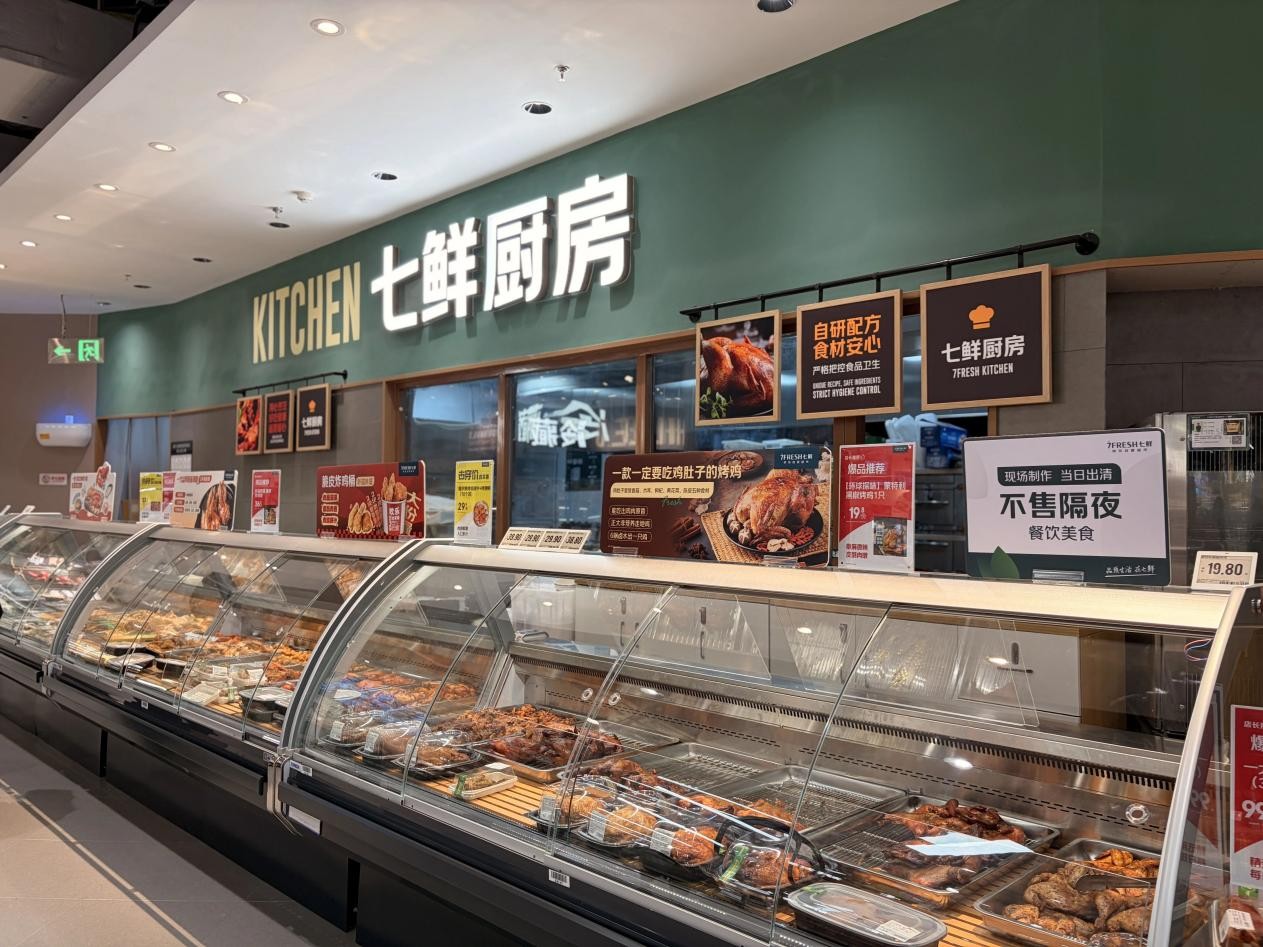
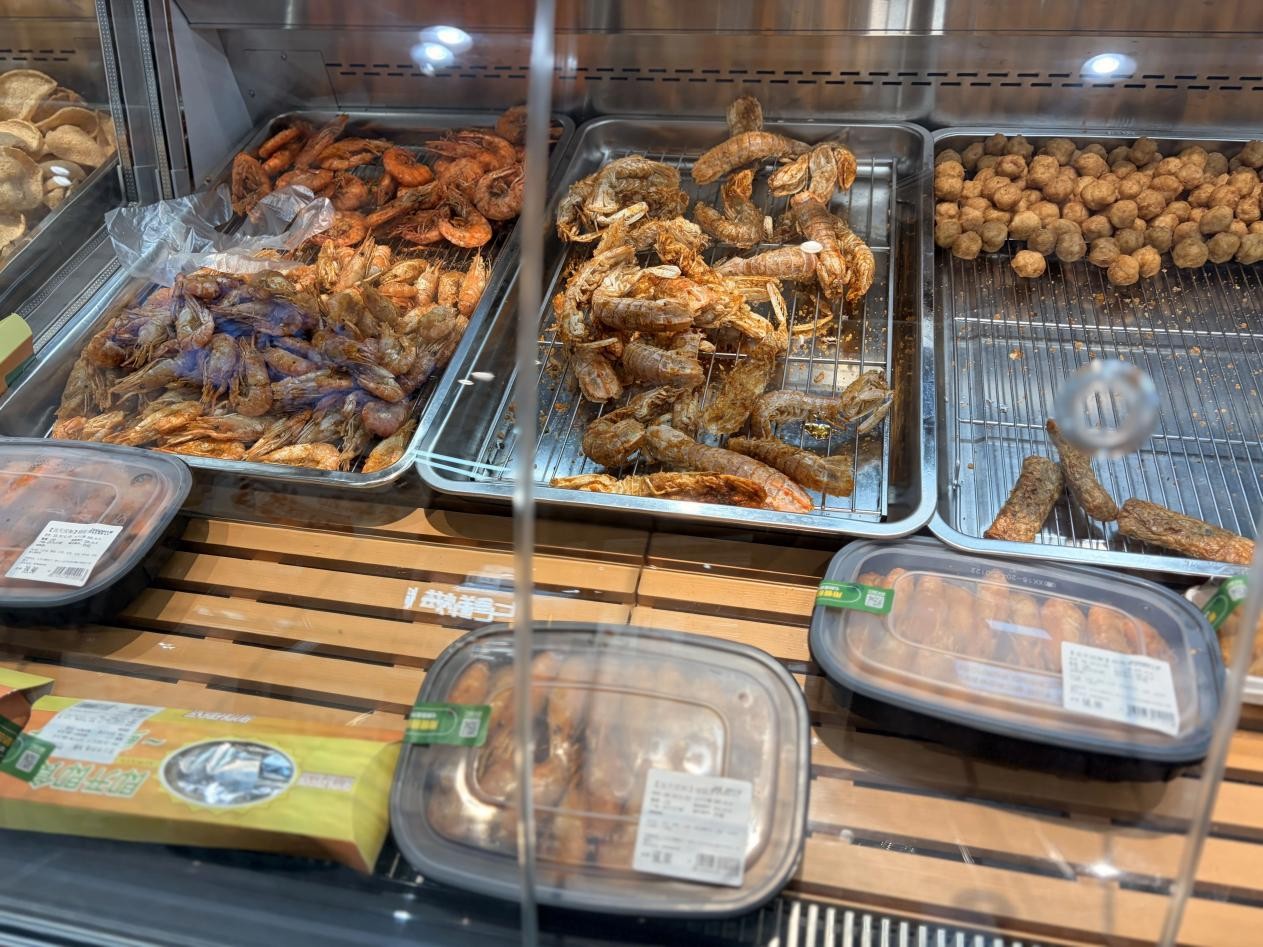
Although the prepared foods area is not large, it covers a comprehensive range, from noodles, seafood, and braised items to fried foods. Trending items like mantis shrimp and braised pig trotters look appealing.
On-site preparation is an important method to attract foot traffic—a small cart next to the prepared foods area offers candied fruit on a stick, sugar-roasted chestnuts, and other specialty foods, adding a sense of liveliness and experiential appeal.
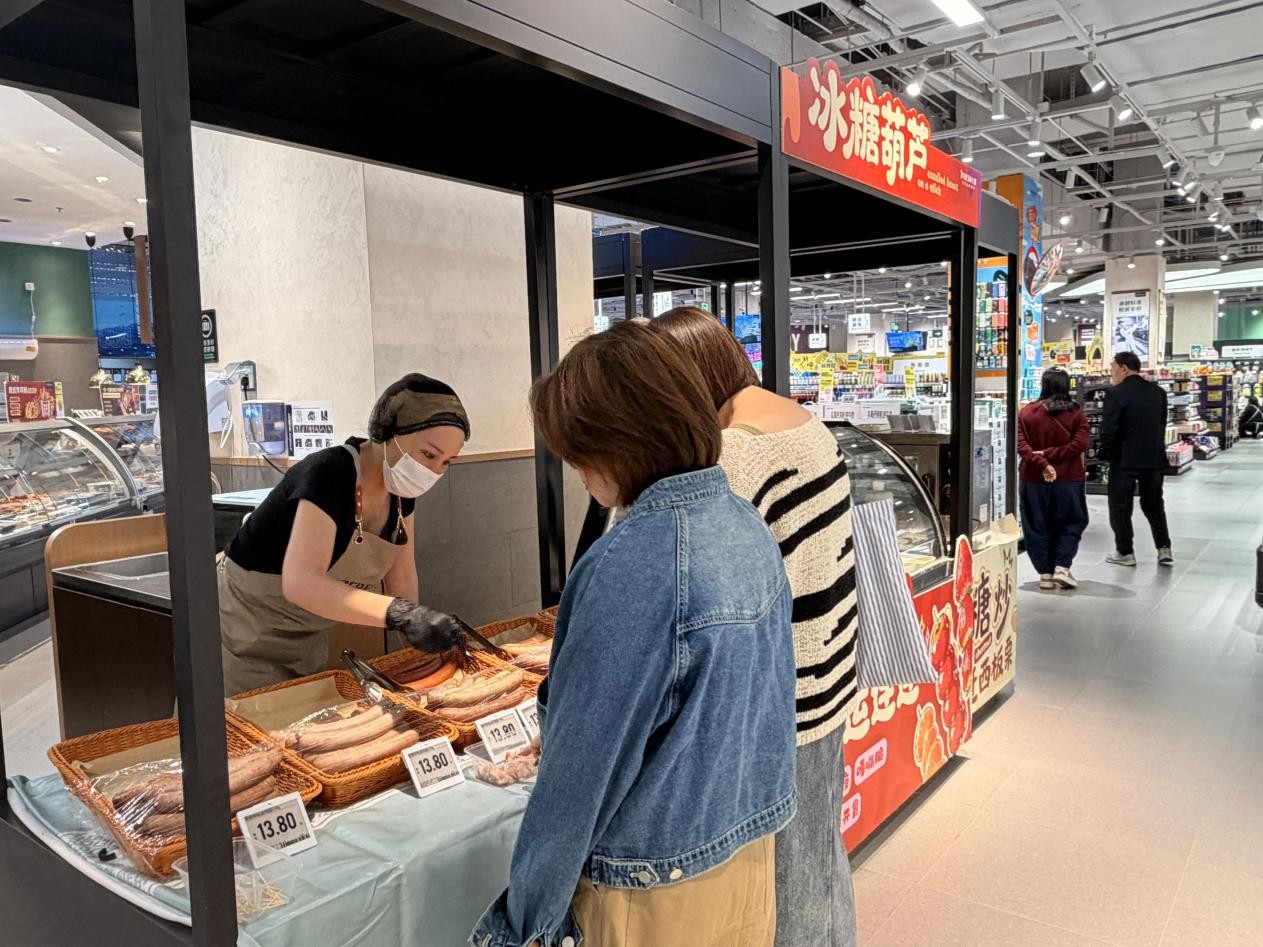
As a key category for attracting customers and increasing average transaction value, prepared food areas have become ubiquitous in various renovated stores over the past two years. For instance, in renovated stores of Yonghui, Wumei, and Metro, the prepared food section is often the most popular area. Comparatively, from the author's perspective, JD.com's 7FRESH prepared food area has not yet reached a stunning level.
7FRESH operates on a "1+N" model, where one central supermarket ("1") supports a network of smaller satellite stores and dark warehouses ("N") across a city.
This architecture is powered by JD.com’s core strength: its "digital-intelligent social supply chain." Through direct sourcing, centralized procurement, and its famed logistics network, 7FRESH achieves "high quality at affordable prices," keeping costs low while ensuring freshness.
This system enables seamless instant delivery, positioning each store as both a shopping destination and a local fulfillment center.
Inside the Wangjing 7FRESH store, the bakery section occupies four islands and an entire row of display cabinets—its prominent placement underscores its importance.
7FRESH Bakery focuses on the core concepts of "freshly baked," health positioning, and high cost-effectiveness. The product line is comprehensive: bread, toast, egg tarts, cakes, and more are all available. Representative products include the Rice Bagel, known for its fusion of rice and wheat aromas and chewy texture, priced affordably at only 5.9 yuan; the Danish Milk Crisp Pineapple pastry with a crispy exterior and rich filling; and the Walnut European Bread combining healthy coarse grains and crunchy nuts.
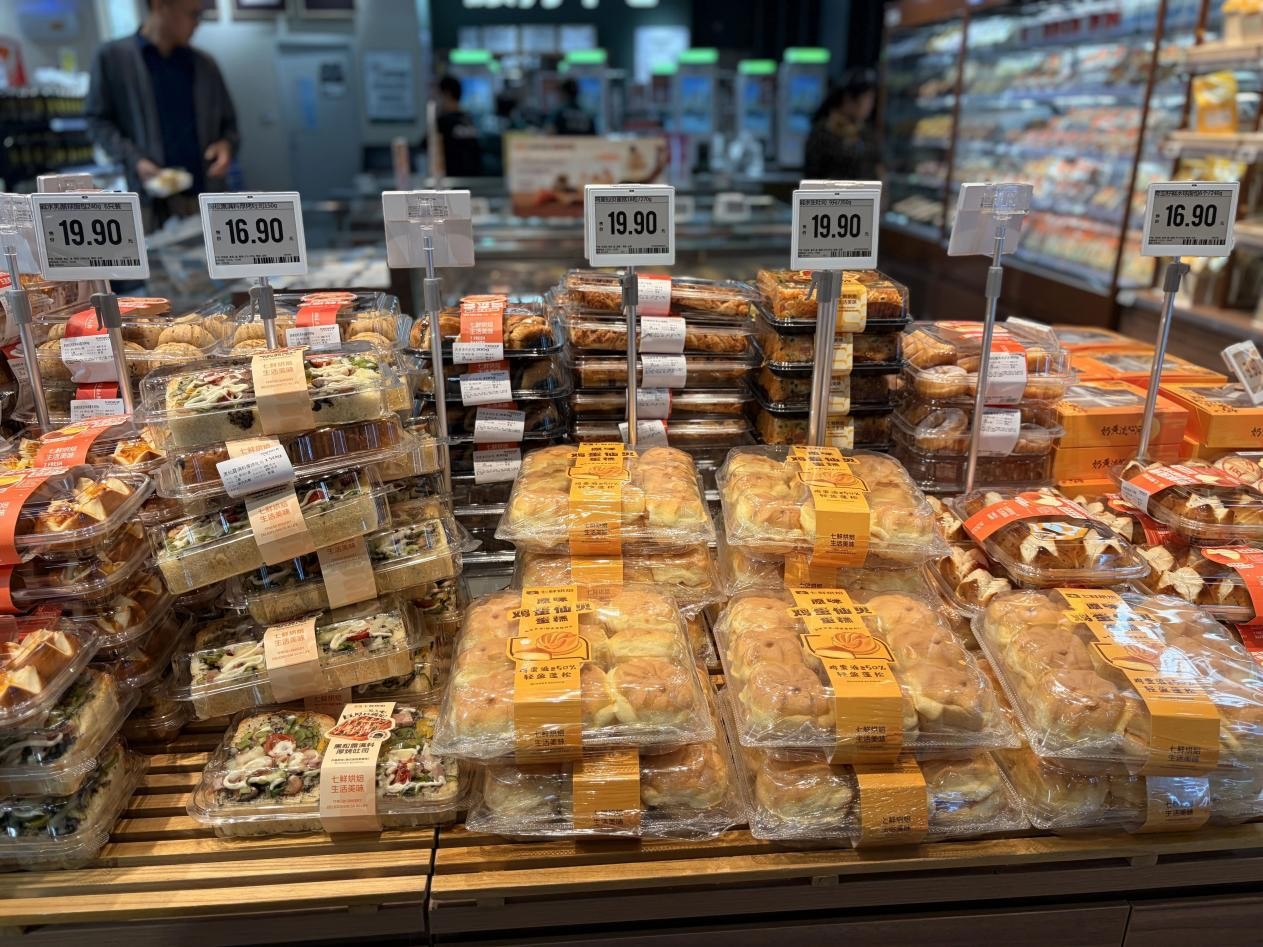
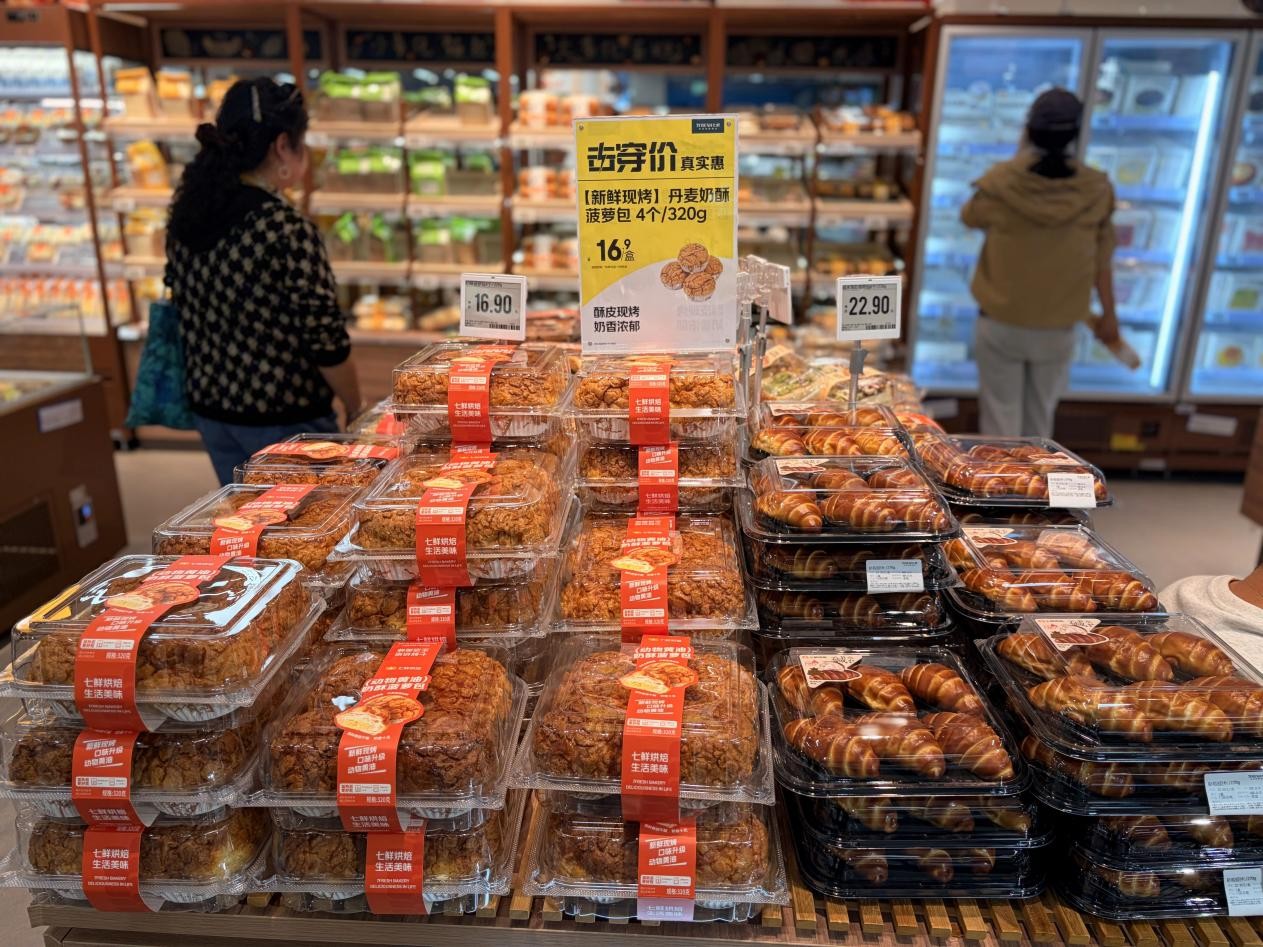
In line with health trends, some bakery items have reduced sugar content, and the "Clean Ingredients" series promises no artificial additives, no genetically modified ingredients, and no trans fats.
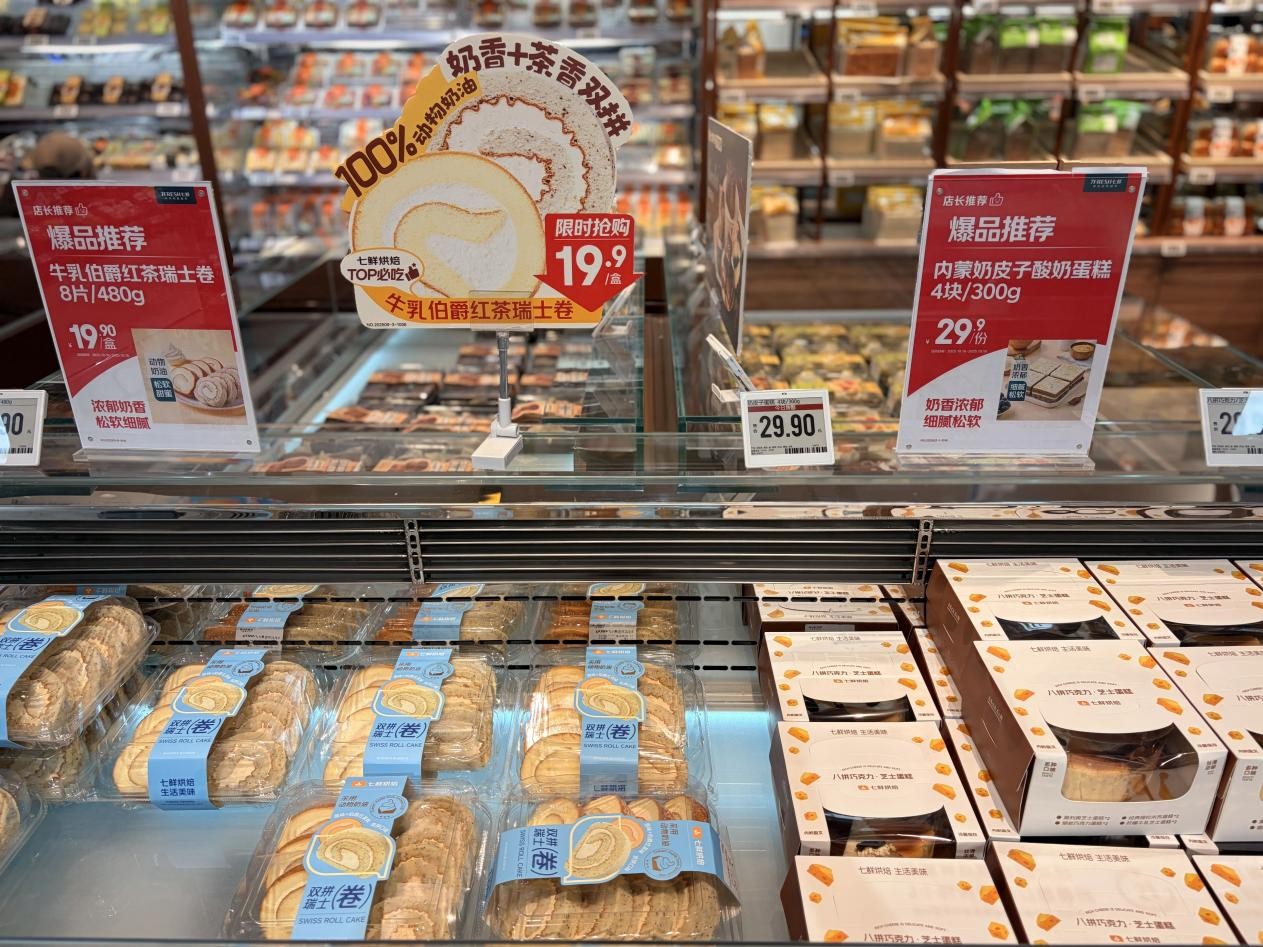
Innovation is another key strength of 7FRESH Bakery. 7FRESH has an independent professional bakery R&D team that, based on quickly responding to market trends, continuously launches hit products. Examples include the "Ginza-style" Japanese Banana Cake Roll made with real banana fruit and 100% animal cream. Another is the Inner Mongolia Milk Skin Yogurt Cake, blending traditional techniques with innovative flavors.
Overall, 7FRESH Bakery's R&D approach is both innovative and retains personalized characteristics.
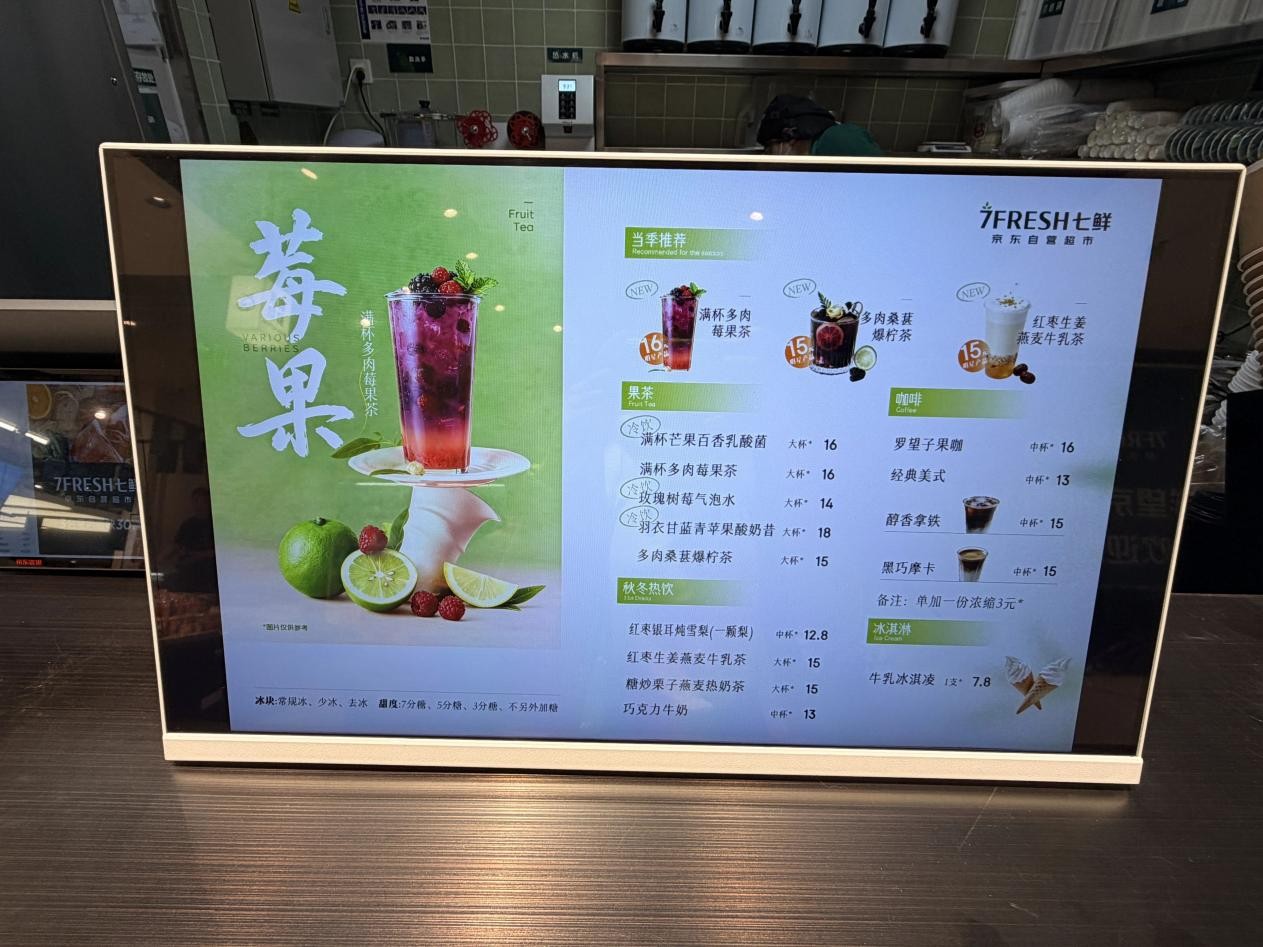
The Wangjing 7FRESH store introduces the 7FRESH Drink Bar for the first time. Judging from the menu, the options are similar to typical freshly made tea beverage stores, including fruit tea, milk tea, and coffee, with prices mainly concentrated in the 12-16 yuan range.
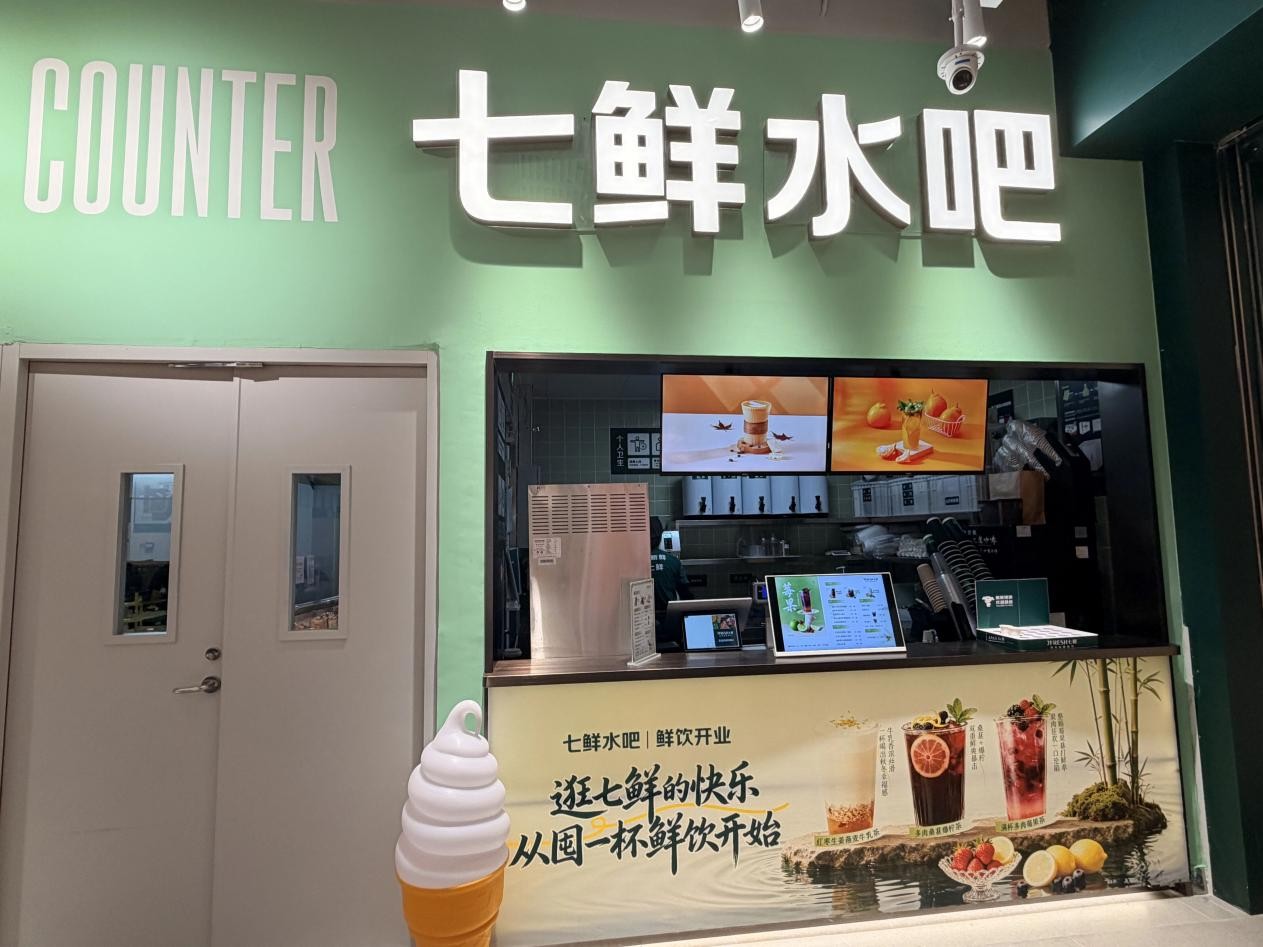
The store currently features three seasonal fruit teas: Full Cup Berry Jelly Fruit Tea, Mulberry Burst Lemon Tea, and Red Date Ginger Oat Milk Tea. According to staff, the seasonal fruit drinks will be adjusted later based on the season.
Overall, the drink bar menu offers 13 beverage options, which is not an extensive number. The 12-16 yuan price point sits in the mid-range of the tea beverage industry.
Regarding delivery service, staff mentioned that during the trial operation period, the 7FRESH Drink Bar does not offer delivery. Consumers can only purchase on-site. This is quite particular within the 7FRESH system, which is centered on instant retail, leading the author to ponder the drink bar's usage scenario—it's located at the supermarket entrance, but with professional tea drink shops visible everywhere in the mall, the drink bar's competitiveness, without clear advantages in price or selection, remains to be tested by the market.
JD.com's 7FRESH is a stark reminder: the future of grocery is being written by those who seamlessly blend data, logistics, and physical experience. For leaders outside China, the time for observation is over. The question is not if to adapt, but how fast? Consider this your strategic checklist:Audit Your Data Advantage: Do you use customer data like JD does—to drive product innovation, not just promotions? What's your version of the "Heritage + Trend" crossover?
Redefine 'Store' Radically: Can your flagship location serve as a local fulfillment hub, supporting a network of pickup points? Map your potential "1+N" model.
Elevate Your Own-Brand Narrative: Is it just about price? Imbue it with a story of quality, sourcing, and local relevance that builds trust beyond cost.
Benchmark Against the 'China Pace': The 445% growth figure is a velocity metric. What would it take to accelerate your own-brand or omnichannel initiatives by an order of magnitude?
JD.com on the World Stage: Often called the "Amazon of China," JD.com is a logistics and e-commerce titan. For instance, JD Logistics’ automated fulfillment center in Groningen, Netherlands, serves as a key hub for pan-European e-commerce, supporting partners like the UK’s beloved fashion retailer ASOS. Its significance extends beyond China through JD Logistics International, which operates fulfillment centers across Europe (e.g., Germany, the Netherlands) and partners with global brands for cross-border e-commerce. Understanding its domestic retail evolution provides clues to its future international strategy and competitive posture.
A Bellwether for Omnichannel Trends: China's retail market, driven by digitally-native consumers, often foreshadows global trends. The seamless integration of online-offline shopping, instant delivery expectations, and the strategic depth of private labels seen at 7FRESH are not unique to China but represent the heightened expectations spreading worldwide.
Decoding "China Retail": For global partners, competitors, or investors, insights like these move beyond the stereotype of a "copycat market" to reveal the sophisticated, innovation-led competition shaping one of the world's largest consumer arenas. This analysis, grounded in store-level observation and performance data, is offered by CHINASHOP as part of our commitment to providing actionable intelligence on the evolving global retail landscape