All posts
CHINASHOP and the Evolution of China’s Retail Formats: A 25-Year In-Depth Report (Part I)
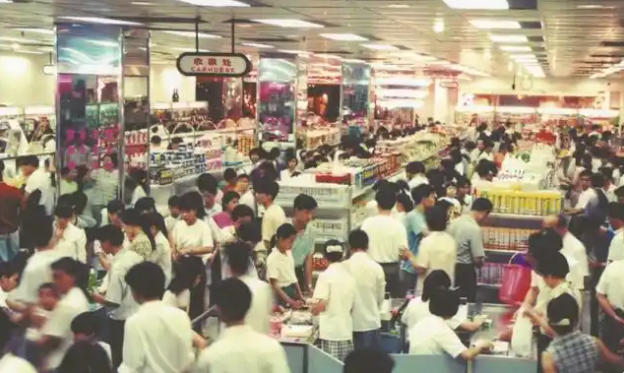
China’s process of retail modernization isa magnificent revolution of industrialization and informatization. In the early1990s, when global retail giants were already speeding along the road ofstandardization, chain operations, and informatization, China’s commercialenvironment was in a dramatic transformation period transitioning from aplanned economy to a market economy. In 1990, China’s first supermarket,Meijia, opened in Dongguan; afterwards, local brands such as Lianhua andHualian began to sprout in pioneer cities such as Shanghai, marking that theopening chapter of China’s “supermarket revolution” had officially begun.
Against this background, the China ChainStore & Franchise Association (CCFA) founded the China Retail Expo(CHINASHOP) in 1999. Its original intention was to provide a window forlearning and procurement for domestic retail enterprises that were still in a“land-reclamation” period. Over twenty-five years, this expo has not onlyrecorded the leap of China’s supermarkets from a “manual workshop” to a“digital-intelligent brain,” but has also become a micro-laboratory forobserving the upgrading of China’s consumer market, the restructuring of supplychains, and technology-driven transformation. This report will combine the trajectoryof macroeconomic development, the evolution规律 ofsupermarket formats, and the exhibition history of CHINASHOP, to deeply analyzethe evolutionary logic of five stages in China’s retail industry.
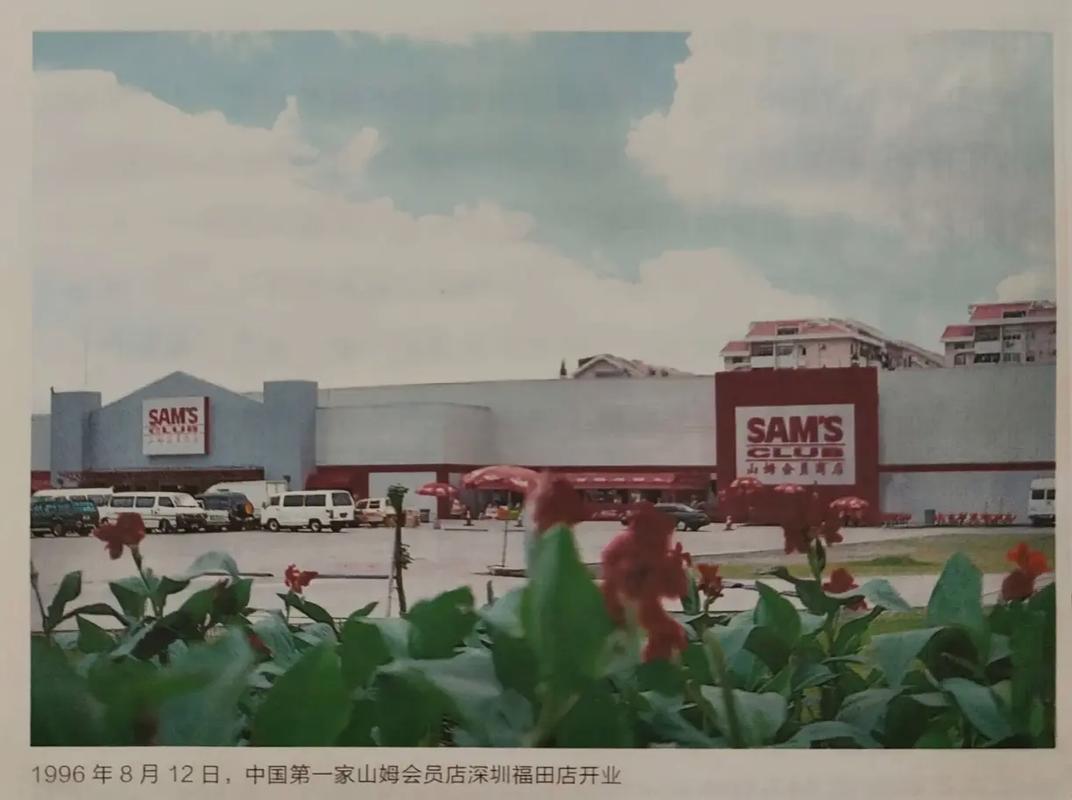
In the late 1990s, although the new speciesof the supermarket (Supermarket) had already appeared in China’s retail industry,its underlying reality was still an extremely weak industrial supportingsystem. At that time, what Chinese supermarket operators faced was not only ashortage of goods, but also a “comprehensive desert” of store hardwarefacilities. Before 1999, although China’s GDP per capita was growing rapidly,the retail formats in most cities were still dominated by department stores andtraditional wet-markets.
Supermarket operators in this period werein an awkward situation of “customers exist but stores cannot be properlybuilt.” As per-capita income crossed the threshold of 1,000 US dollars,consumers in first-tier cities showed a strong desire for open-shelfself-selection and one-stop shopping. However, the industrial system at thattime could not support this desire. If a retailer wanted to open a5,000-square-meter supermarket, he would be surprised to find that the marketcould not provide standardized checkout counters; nor were there supermarketshelves with load-bearing standards and anti-rust processes; let alone complexcold-chain display cabinets.
It was precisely under this background ofsevere supply-demand imbalance that early CHINASHOP presented a veryChina-specific phenomenon: buyers set up booths to “seek help,” and suppliers“answered the challenge” on site. At the first expo in 1999 (the exhibitionsaround 2000), because there were very few specialized retail equipmentmanufacturers, retail enterprises that had store-opening needs instead becamethe protagonists of the expo. They brought their vision of future stores,posted detailed lists of equipment requirements at their booths, and askedpassing factory owners: “Can you make this kind of refrigerated cabinet?” or“Can you mass-produce this kind of checkout counter?”
This “reverse booth-setting” reflected thepassivity and helplessness of China’s retail industry at its starting stage.Because of the lack of standardization, shelves at that time were oftentemporarily processed by local carpenters or blacksmith workshops; thisworkshop-style model led to extremely high store-opening costs and extremelylow safety. Uneven shelf load-bearing causing collapses, and insufficientrefrigeration causing food spoilage, were common occurrences (such phenomenahappened from time to time). The core function of early CHINASHOP was notproduct trading, but “violent matching” of information; it forced factoriesthat originally produced industrial shelves or traditional refrigerators tobegin studying the hardware needs of the specific supermarket scenario.
1999 was a year with symbolic significance.In this year, Shanghai Lianhua Supermarket’s annual sales reached 7.3 billionRMB, surpassing Shanghai No. 1 Department Store, which had held the topposition for 50 years, for the first time—marking that the era in which thedepartment store industry was the dominant retail format officially ended. Inthe same year, early e-commerce sprouts such as the establishment of the 8848website, although four years later than the United States’ Amazon, indicatedthat the foreshadowing of future multi-channel competition had already beenplanted. In this stage, China’s retail industry completed its originalaccumulation of capital and formats within an infrastructure desert.
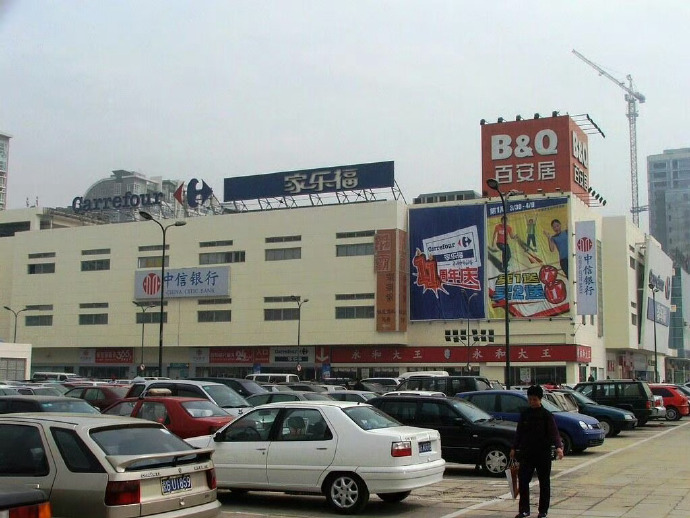
After China joined the World TradeOrganization (WTO) in 2001, the retail industry entered a golden decade of fullopening. Carrefour, Walmart, and other multinational giants expanded rapidlyfrom point to area during this period, accelerating their race to occupyterritory. Taking 2005 as a key watershed, foreign retail enterprises achievedleapfrog growth from “starting with single digits” to “hundreds of stores inchain” through dense network rollout; the formation of this scale effect markedthat their penetration in China entered its peak period.
What foreign giants brought was not onlycapital and merchandise, but also a set of mature “globally unified standards.”Carrefour demonstrated strong expansion flexibility through alliances withlocal governments; while Walmart adhered to its famous Standard OperatingProcedures (SOP) and IT systems. For Chinese equipment manufacturers at thattime, these standards were both strict challenges and the best textbooks.Walmart’s precise requirements for shelf height and width, durability testingfor shopping-cart wheels, and limits on the 24-hour temperature fluctuationrange of cold-chain systems, forced Chinese local factories to abandon thetraditional “blacksmith mindset” and embrace modern industrial assembly lines.
In order to take on these internationalorders, a large number of Chinese local enterprises completed a thoroughtransformation around 2002. In 2002, Walmart set up its Global ProcurementCenter (WMGP) in Shenzhen; the inflow of massive orders directly stimulated anoutbreak of retail-hardware manufacturing in the Yangtze River Delta and thePearl River Delta. CHINASHOP correspondingly evolved into a “showroom forfactories.” Retail enterprises no longer needed to set up booths to “call forhelp,” because the exhibition halls were already filled with one-stopstandardized equipment that enabled “turnkey store opening.”
In this stage, China’s retail industrycompleted the leap from “manual hammering” to “industrial assembly lines.”Standardized shopping carts, professional lighting systems, and air-cooledrefrigeration cabinets became the protagonists of the expo. The maturity ofthis hardware not only reduced store-opening costs, but also enabled Chineseretailers to conduct large-scale cross-regional replication like foreigngiants. At this time, retail competition was essentially “hard-powercompetition”: whoever could roll out standardized stores faster could capturethe minds of urban consumers.
Although foreign retail enterprises hadoverwhelming advantages in standardization, China’s complex business culture(such as “guanxi” culture) also brought them considerable shocks. Walmart’scentralized procurement strategy promoted after 2002 once encounteredcollective resistance from local suppliers, causing it to lag behindcompetitors that were more locally flexible in the contest for market share fora period. However, this “catfish effect” brought by an “alien species” forcedlocal retailers to quickly catch up in equipment investment and managementstandards, objectively promoting the overall upgrading of China’s retailenvironment.
FromPhysical Foundations to Digital Awakening
By 2010, China’s retailindustry had completed its most fundamental transformation: standardized storeinfrastructure, industrialized equipment supply, and scalable chainreplication. What began as a struggle to simply “build a store” had evolvedinto an industry capable of rapid nationwide expansion.
Yet this hardware-drivengrowth also exposed new limitations. As store numbers peaked and competitionintensified, efficiency—not scale—became the next battlefield. The answerswould no longer come from shelves and checkout counters, but from data, systems, and software.
In Part II, the storycontinues—shifting from physical retail infrastructure to digital operations,omni-channel integration, and ultimately, AI-driven retail intelligence.
CHINASHOP and the Evolution of China’s Retail Formats: A 25-Year In-Depth Report (Part II)